The Archive

Past Seasons

A look back at the concerts the Symphony has already performed, with their programs and venues, from the California Theatre years to today.

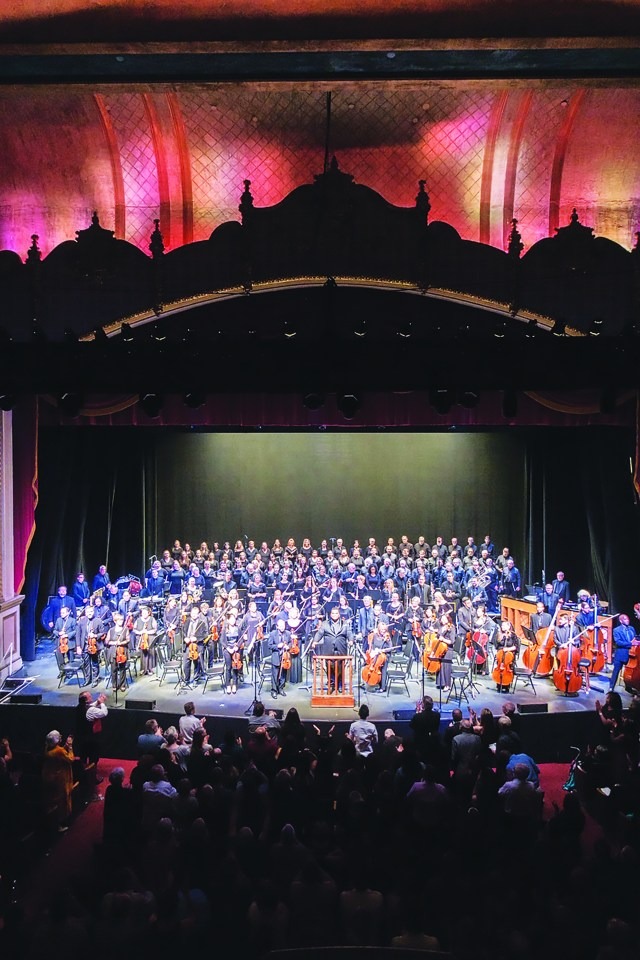
An audience in the theater

Season

2026

The San Bernardino Symphony on stage

February 21, 2026

American Voices

A celebration of the American sound — from concert hall masterpieces to the music that shaped a nation.

Program+
  • John Stafford Smith — The Star-Spangled Banner
  • George Gershwin — Strike Up the Band Overture
  • Scott Joplin — The Entertainer
  • Florence Price — Symphony No. 3, II. Andante ma non troppo
  • Duke Ellington (arr. Paress) — Black, Brown and Beige
  • Wynton Marsalis — Blues Symphony, I. “Born in Hope”
  • Beethoven (arr. Fogelman) — Joyful, Joyful, We Adore Thee
  • Sneed (orch. Oppido) — Reflections of Resilience
  • Richard Smallwood (arr. Fogelman) — Total Praise
  • Johnson & Johnson (arr. Rubolino) — Lift Every Voice and Sing
Symphony musicians performing chamber music

May 15, 2026

Chamber Music

An intimate evening with the Symphony's Principal players — wind quintets and Poulenc's beloved Sextet.

Program+
  • Paquito D'Rivera — Aires Tropicales, 6. Contradanza
  • Eric Ewazen — Roaring Fork Quintet, 1. Whitewater Rapids
  • Amanda Harberg — Suite for Wind Quintet, 4. Cabeletta
  • Julio Medaglia — Belle Epoque in Sud America
  • Arne Running — Quodlibet
  • Poulenc — Sextet
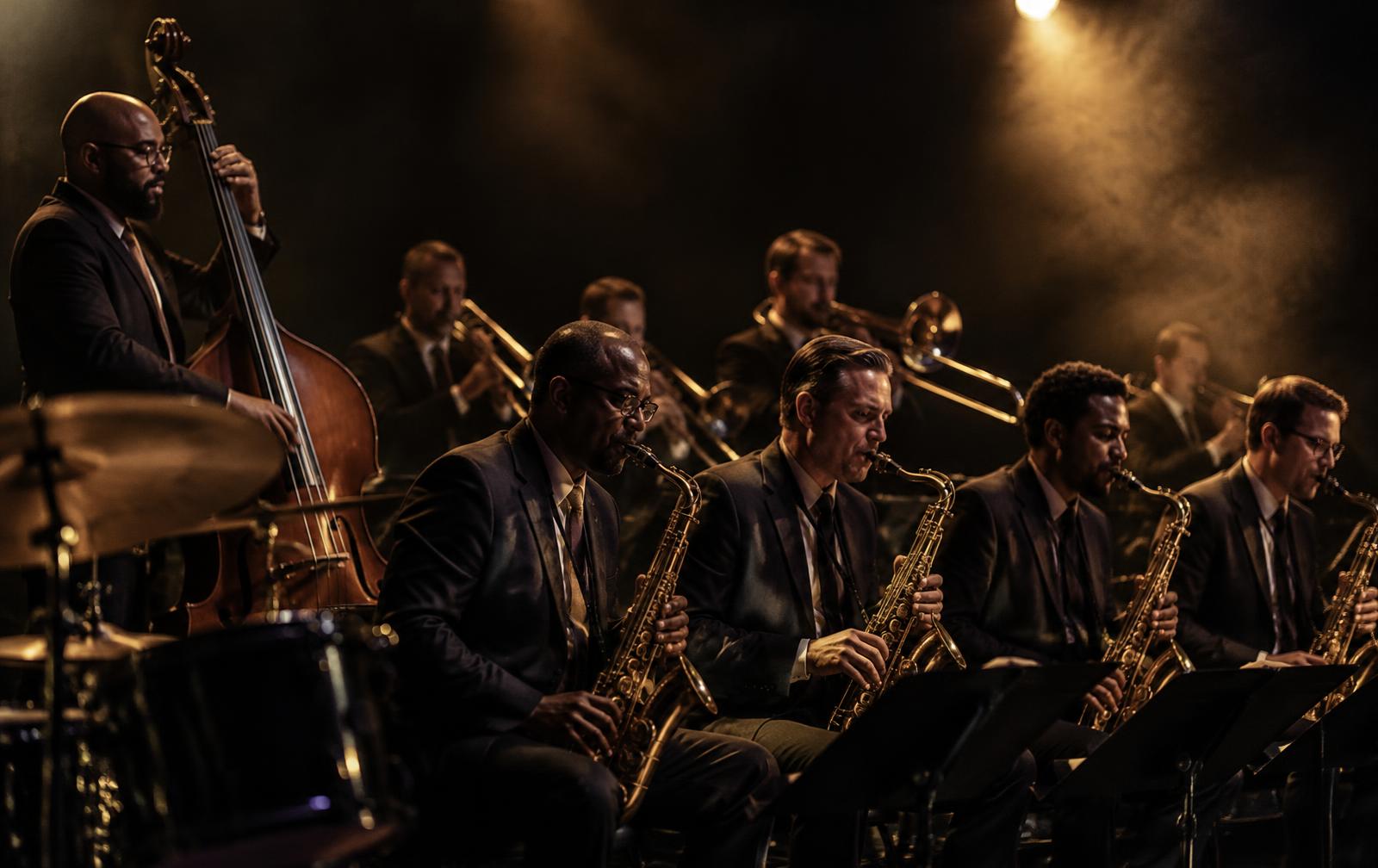
Jazz musicians performing with the Symphony

September 5, 2026

This Is Jazz

The annual Thomas R. and Mary Ellen Brigante Jazz Performance — an afternoon of jazz greats.

Program+
  • Josh Nelson — “Introspection on 401”
  • Mike Wofford — “Bleep” · “It's Personal”
  • Michel Petrucciani — “Sahara” · “Lullaby” · “Home”
  • Anthony Wilson — “Song from a Dream”
  • Mulgrew Miller — “Grew's Tune” · “For Those Who Do” · “Leilani's Leap”
  • Kenny Kirkland — “Steepian Faith”
  • Josh Nelson — “Spirit”

Program Notes

Notes by Dr. Jessica Getman, Assistant Professor of Musicology/Ethnomusicology, California State University, San Bernardino.

Fanfare from La Peri+

Paul Dukas (1865–1935)

About This Piece

Best known for his symphonic scherzo L’apprenti sorcier (“The Sorcerer’s Apprentice,” 1897), Paul Dukas was famous during his lifetime as a music critic and teacher as well as composer, having served as a professor at the Conservatoire de Paris and across France. Entirely self-critical, he destroyed most of his unfinished and those compositions he considered sub-par in the last years of his life. His La Péri (a poème dansé, or danced poem) was his final large-scale work—he almost destroyed it as well, but it was saved at the insistence of his friends. A one-act ballet dedicated to the French dancer Natalia Trouhanova, known for her portrayals of Salome in various stage works on that character, La Péri was based on a Persian folk story of a prince who seeks the flower of immortality (a lotus) and falls in love with a sleeping fairy (the eponymous peri). Dukas wrote the fanfare to La Péri at the last minute, after he had finished the ballet and it was about to be premiered. Scored for brass choir, it is written in three parts—with a grandiose and powerful opening, a softer and more introspective midsection, and a final return to the initial fanfare.

Program notes by:

Dr. Jessica Getman

Assistant Professor of Musicology/Ethnomusicology

California State University, San Bernardino

Sonata from “Die Bänkelsängerlieder” (c. 1684)+

Daniel Speer (1636–1707)

About This Piece

This seventeenth-century work remained anonymous for quite a long time, though it has recently been attributed to the German composer and theorist Daniel Speer, a church musician and teacher known for religious music and quodlibets, as well as for treatises, novels, and political commentary. This sonata, commonly referred to simply as “Die Bänkelsängerlieder” after the collection in which it was found, is now his most famous work. It was originally discovered in 1880 among a collection of dances and instrumental works that included parts not only for five wind instruments, but also one for a singer; the vocal part was filled with ribald jokes and poems. This makes sense; the term “Bänkelsänger” means “bench singer” and refers to the traveling musicians who performed in local taverns, standing on benches and singing off-color songs. This sonata was the twenty-ninth of forty-one pieces printed in this collection; the label “sonata” in this case simply means a work for musical instruments, drawn from the Italian term “sonare”—“to sound.” It wasn’t until the Classical era, in the late eighteenth century, that our modern, more formally constrained version of the sonata crystallized. This early sonata was originally scored for trumpet, cornetto, three trombones, and an accompanying keyboard instrument. It is now most commonly performed as a work for brass quintet.

Program notes by:

Dr. Jessica Getman

Assistant Professor of Musicology/Ethnomusicology

California State University, San Bernardino

"Tornami a vagheggiar"+

from Alcina (HWV 34; 1728)

George Frideric Handel (1685–1759)

About This Piece

Handel’s Alcina was written for the composer’s first season at the newly built Covent Garden in London’s West End. An opera in three acts, it is based in part on Ludovico Ariosto’s poem Orlando Furioso and tells the story of a paladin, Ruggiero, who runs afoul of two sorceresses—the sisters Alcina and Morgana—on Alcina’s enchanted island. Alcina has a history of seducing heroes who visit her island, turning them rocks, streams, plants, or wild animals when she tires of them. She falls for Ruggiero and tricks him into loving her, but his fiancé, Bradamante, arrives in search of him, dressed as her brother, Ricciardo. Morgana, in turn, falls in love with “Ricciardo.” More deception and magic ensue, but eventually Ruggiero and Bradamente overcome the women, thus freeing themselves and all the other men previously transformed by Alcina. “Tornami a vagheggiar” is sung at the end of the first act by Morgana, expressing her love for “Ricciardo.” (In some productions, this aria is sung by Alcina to Ruggiero.)

Program notes by:

Dr. Jessica Getman

Assistant Professor of Musicology/Ethnomusicology

California State University, San Bernardino

Tornami a vagheggiar,

Te solo vuole amar

Quest' Anima fedel,

Caro mio bene.

Già ti donai ’l mio cor:

Fido sarà el mio amor.

Mai ti sarò crudel,

Cara mia spene.

My soul is full of you alone,

My dearest youth,

You only can I love.

Since now I’ve given you my heart,

I never more will change,

But ever will be kind and true,

My dear, alone to you.

Concerto for Bassoon in D minor, RV 481+

Antonio Vivaldi (1678–1741)

About This Piece

His long-held position as teacher and composer at the Pio Ospedale della Pietà—a home for orphaned girls in Venice—gave Antonio Vivaldi (1678–1741) the perfect laboratory for perfecting the concerto form in the early eighteenth century. In all, he wrote thirty-seven concerti for bassoon (or possibly for its precursor, the dulcian), second in number only to those for violin (coming in at over 230 violin concerti). Many of his concerti were meant to be played by his students at the Pietà, written in a way that showed off the skill of the soloist but allowed a wide variety of talents to participate in the orchestra—the soloist’s part was virtuosic, the orchestral accompaniment much simpler. It is unknown, however, whether Vivaldi’s bassoon concerti were intended to showcase students at the Pietà, or if they were written for another local bassoonist. What we do know is that Vivaldi’s focus on this instrument during this period was exceptional, as the bassoon had been largely neglected by Italian composers in the late seventeenth century. His skill at writing technical passages that were simultaneously virtuosic and yet comfortable on the instrument showcased the soloist through dazzling figurations and melodious stretches alike.

This D Minor concerto (RV 481; c. 1720s) is in the three-movement concerto structure that Albinoni introduced and that Vivaldi perfected, with fast first and third movements that exchange passages between the orchestra and the soloist, and a slow middle movement featuring eloquent, long-breathed melodies. Vivaldi employed the first movement of this concerto in his D Minor cello concerto (RV 406) as well, an unsurprising move (since a number of his concerti were related to each other in various ways), but one that emphasizes the ability of the bassoon and the cello alike to perform well in both the bass and tenor ranges. This concerto demonstrates the expressivity and dexterity of the bassoon and its player through Vivaldi’s exuberant but precise aesthetic.

Program notes by:

Dr. Jessica Getman

Assistant Professor of Musicology/Ethnomusicology

California State University, San Bernardino

Ave Maria+

Johann Sebastian Bach (1685–1750) Charles Gounod (1818–93)

About This Piece

The “Ave Maria” (“Hail Mary”) is a Catholic prayer to the Blessed Virgin Mary, asking for her intercession on behalf of sinners. As a text, it has been set to numerous melodies and in countless works, but the best-known of these must be Gounod’s arrangement, a discant written over J.S. Bach’s 1722 Prelude and Fugue in C Major (BWV 846). Originally transcribed by the composer’s father-in-law from Gounod’s improvisations at the piano, this work was first published in 1853 for violin and piano as Méditation sur le Premier Prélude de Piano de S. Bach. While several texts were set to the Méditation, Gounod eventually landed on the text of the “Ave Maria.” This more recognizable verse has been tied to the work since. Gounod’s Ave Maria has been arranged for almost every ensemble imaginable, including his own arrangement for violin, orchestra, and chorus (using the text of Revelation 7:12 instead of the “Ave Maria”)—and the arrangement for flute and harp we hear today.

Program notes by:

Dr. Jessica Getman

Assistant Professor of Musicology/Ethnomusicology

California State University, San Bernardino

Arabesque No. 1+

Premiere Arabesque

Claude Debussy (1862–1918)

About This Piece

Debussy’s two arabesques were early works for piano, written when he was in his late twenties and beginning to come into his own as an “impressionist” composer. Drawing his ideas from the French symbolist movement in literature and art, which rejected naturalism and realism and embraced the enigmatic and indefinite, it was not uncommon for Debussy to talk about his music in artistic terms, as though the musical score was a work of visual art itself. Even the title of this early work, Deux Arabesques, equally references dance (a ballet position), prior musical tradition (the French Baroque dance form, which boasted an “Arabic” sound), and visual art (inspired by a complex, interlacing, and foliage-inspired pattern that references Islamic art). Debussy used the term “arabesque” to reference a wide range of music, though much of that exemplified the exoticism and filigree the term implies. This is certainly the case with his first Arabesque.

Program notes by:

Dr. Jessica Getman

Assistant Professor of Musicology/Ethnomusicology

California State University, San Bernardino

Holberg Suite, Op. 40+

Holberg Suite

I. Prelude

Edvard Grieg (1843-1907)

About This Piece

Best known for his incidental music to the five-act play Peer Gynt (1875), which he eventually worked into two well-known orchestral suites, the Norwegian composer Edvard Grieg (1843–1907) was more at home writing pieces for the piano and for chamber groups. His shorter lyric works, including his songs and piano miniatures, demonstrated Romantic-era sensibilities while also drawing on folk-song origins. His suite “Fra Holbergs tid,” or “From Holberg’s Time,” however, was a neo-baroque piece that drew from eighteenth-century styles and forms.

Originally written for piano in 1884, “Fra Holbergs tid” (“From Holberg’s Time: Suite in Olden Style”) was a five-movement French baroque dance suite—a prelude, and then a sarabande, a gavotte, an air, and a rigaudon. The work was commissioned as part of the Holberg bicentenary celebrations; Ludvig Holberg was a celebrated Norwegian author, playwright, and philosopher born in 1684—hence Grieg’s atavistic turn to the baroque. As Mark Laycock has noted, “This deliberate look backward at a revered and thoroughly Scandinavian subject \[Holberg\], viewed through a Romantic sensibility, resulted in a richly layered, captivating aggregation of antique and contemporary melodic, harmonic, and formal gestures.”

In 1885, Grieg re-orchestrated the suite for string orchestra, setting it in what is now its most popular arrangement. The prelude in particular is well known, with its characteristic bold changes driven by contrasts in volume, harmony, articulation, and melody. With a short rhythmic ostinato overlaid with simple, charming melodies, the prelude is an energetic opening to the suite (and our concert!).

Program notes by:

Dr. Jessica Getman

Assistant Professor of Musicology/Ethnomusicology

California State University, San Bernardino

Serenade for Strings in C major, Op. 48+

I. Pezzo in forma di Sonatina (Piece in the form of a sonatina)

Piotr Illych Tchaikovsky (1840–1893)

About This Piece

In 1880, Piotr Illych Tchaikovsky (1840–1893) was busy writing his 1812 Overture (Op. 49) and his Serenade for Strings (Op. 48) simultaneously. Though the 1812 has been passed down to us as one of his best-loved works, the composer surprisingly preferred the Serenade, as he noted in a letter to a benefactor: “The overture will be very noisy. I wrote it with little feeling of love; therefore it has no great artistic value. The Serenade, on the contrary, I wrote from inner compulsion; it is a work from the heart….”

The Serenade was originally conceived by Tchaikovsky as a symphony, and then briefly as a string quintet; he eventually settled on a serenade for string orchestra, noting on the finished score “the larger the string orchestra, the better the composer’s wishes will be met.” The neo-classical first movement of the Serenade, the “Pezzo in forma di Sonatina” (a “little sonata”) is a tribute to Mozart, a composer that Tchaikovsky admired and emulated. The movement is built on two themes—a short, declarative, but affecting four-note motive on one hand, and delightfully energetic, Mozartian scales and falling figures on the other. These themes are framed at the movement’s start and finish by exquisite chorale-style voice-leading on a falling tetrachord—the most recognizable and gratifying component of this work.

Program notes by:

Dr. Jessica Getman

Assistant Professor of Musicology/Ethnomusicology

California State University, San Bernardino

Lyric for Strings (1946)+

George Walker (1922–2018)

About This Piece

George Walker wrote his first major work, his String Quartet No. 1, in 1946, fresh out of his conservatory training at the Curtis Institute of Music. A concert pianist, composer, and teacher, hailing from Washington, D.C., he studied with Nadia Boulanger and Robert Casadesus, taught at Rutgers University and the University of Colorado, Boulder, and toured the United States and abroad as a performer with institutions like the Philadelphia Orchestra and the Baltimore Symphony Orchestra. As a composer, he earned Fulbright, Whitney, Guggenheim, Rockefeller, and MacDowell fellowships, and won a prestigious award from the American Academy and Institute for Arts and Letters. He was the first Black American composer to win a Pulitzer, in 1996, for his song cycle Lilacs (1995). Walker’s Lyric for Strings—his best-known work—is a resetting for string orchestra of the slow second movement of his String Quartet No. 1 (much along the vein of Samuel Barber’s Adagio for Strings \[1936\]). Hearing this work in the hands of a larger ensemble, Walker was reminded of his grandmother, who had passed in 1945; the work is dedicated to her.

Program notes by:

Dr. Jessica Getman

Assistant Professor of Musicology/Ethnomusicology

California State University, San Bernardino

Adagio for Strings and Organ in G Minor+

Tomaso Albinoni (1671–1750)

Remo Giazotto (1910–1998)

About This Piece

Tomaso Albinoni (1671–1750) was a remarkably independent and productive composer in late-baroque Italy, the composer of at least fifty operas (possibly up to eighty, as many have been lost), almost fifty solo cantatas, a hundred sonatas, almost sixty concerti, and eight sinfonias. The son of a merchant, he was able to pursue a life as a composer and musician with little support from patrons. His music was quite popular in his own time, with his instrumental music often compared with that of Corelli and Vivaldi, and his Opus 1 (a trio sonata) used as the basis of several keyboard fugues by none other than J.S. Bach. He had a particular preference for the violin and oboe as solo instruments, and often wrote for these instruments as he would for the human voice.

Curiously enough, the work for which Albinoni is best known in the twenty-first century—and which we will be hearing in this concert—is not actually his own. The Adagio in G Minor is actually a twentieth-century invention by the musicologist and critic Remo Giazotto, who was well known for his biographical work on Genoa, Vivaldi, and Albinoni. Having written on the life of Albinoni in 1945, he then composed the Adagio in 1958 as an elaboration on a theme supposedly taken from one of Albinoni’s sonatas. Unfortunately, the provenance of the original theme has been difficult to prove, as a sonata by Albinoni containing this material no longer exists; Giazotto’s personal records provide no help.

Today, the piece is generally considered a neo-baroque composition by Giazotto himself, written in the style of Albinoni and possibly based on a melody by him. Still, this gorgeous work is enormously popular and can be heard regularly not only on the symphonic stage, but also in films like Rollerball (1975), Flashdance (1983), and Manchester by the Sea (2016), as well as the more recent FX television series The Assassination of Gianni Versace (2018).

Program notes by:

Dr. Jessica Getman

Assistant Professor of Musicology/Ethnomusicology

California State University, San Bernardino

“O mio babbino caro”+

from Gianni Schicchi (1918)

Giacomo Puccini (1858–1924)

About This Piece

The famous aria “O mio babbino caro” (“Oh my dear papa”) hails from a the third of a trio of operas composed late in Puccini’s career. The three works—Il tabarro, Suor Angelica, and Gianni Schicchi—formed Il trittico, a set of one-act operas meant to be presented as a unified performance in contrasting styles: the dramatic, the sentimental, and the comedic. Gianni Schicchi is a comedy about a greedy family; the cunning character Gianni Schicchi helps the family re-write their dead father’s will. Ultimately, it is revealed that he does this to smooth the way for his daughter Lauretta’s marriage to the family’s son, Rinuccio…and to double-cross the family and take the late father’s wealth himself. Drawn from Dante’s Divine Comedy, and with a libretto by Giovacchino Forzano, Gianni Schicchi was the most famous of the three operas in Il trittico, and “O mio babbino caro”—a plea from Lauretta to Schicchi to allow her to marry Rinuccio—is the most famous aria from the work.

Program notes by:

Dr. Jessica Getman

Assistant Professor of Musicology/Ethnomusicology

California State University, San Bernardino

O mio babbino caro,

mi piace è bello, bello;

vo'andare in Porta Rossa

a comperar l'anello!

Sì, sì, ci voglio andare!

e se l'amassi indarno,

andrei sul Ponte Vecchio,

ma per buttarmi in Arno!

Mi struggo e mi tormento!

O Dio, vorrei morir!

Babbo, pietà , pietà!

Babbo, pietà , pietà!

Oh my dear papa,

I love him, he is handsome, handsome;

I want to go to Porta Rossa

to buy the ring!

Yes, yes, I want to go there!

And if I loved him in vain,

I would go to the Ponte Vecchio,

but to throw myself in the Arno!

I am anguished and tormented!

Oh God, I'd want to die!

Papa, have pity, have pity!

Papa, have pity, have pity!

“Nimbus 2000”+

from Harry Potter and the Sorcerer’s Stone, Suite for Orchestra (2005)

John Williams (1932–)

About This Piece

John Williams changed the film world with his late 1970s scores for Jaws (1975), Close Encounters of the Third Kind (1977), and Star Wars: A New Hope (1977). Drawing from the late-Romantic and early-twentieth-century idioms of composers like Wagner, Tchaikovsky, Holst, and Korngold, he brought lush, orchestral scoring back into vogue in an industry that had briefly turned to jazz, popular, and compiled scores.

By the early 2000s, Williams had written scores for many of Hollywood’s most successful blockbusters, and his torch had been carried forward by a whole generation of film composers. His collaboration with Chris Columbus on Harry Potter and the Sorcerer’s Stone (2001) marked his third partnership with the director. It produced what became two of the most popular musical themes for the Harry Potter film franchise—Hedwig’s theme and the Nimbus 2000 (flying) theme. Both pieces emphasize the enchantment and curiosity at the core of the Potter stories through orchestration (Hedwig’s theme employs a celesta and the Nimbus theme focuses on woodwinds) and through harmonic progression (both themes rely on Neapolitan sixth, augmented sixth, and chromatic mediant chords—often signifiers of fantasy and illusion). This third movement of Williams’ suite on the film’s score makes the woodwind section the star of the show as the ensemble brings to life Harry Potter’s magical flying broomstick.

Program notes by:

Dr. Jessica Getman

Assistant Professor of Musicology/Ethnomusicology

California State University, San Bernardino

America the Beautiful (1910)+

Samuel Ward (1848–1903)

Katharine Lee Bates (1859–1929) arr. Carmen Dragon (1914–84)

About This Piece

The version of this patriotic song popular today was first published in 1910 as a combination of Samuel Ward’s hymn tune “Materna” (1882) and Katharine Lee Bates’s poem “America” (1893). Bates, an English professor at Wellesley College, wrote the poem after having traveled to the top of Pikes Peak in Colorado via covered wagon and mule. From the top of the mountain, she could see almost to Kansas to the east and across to the Rocky Mountains to the North—a view that inspired gratefulness and hope. “All the wonder of America seemed displayed there.” The poem was set to a number of tunes over time, but the tune that eventually stuck was Ward’s “Materna”—a melody originally meant for the hymn “O Mother Dear, Jerusalem” by the Scottish theologian David Dickson. In 1904, Bates published an updated version of the poem that simplified its phrasing and rhyme, easing its musical setting, but the song’s unrelenting optimism and splendorous vision remained.

The original text for the first verse of Bates’s poem:

O beautiful for halcyon skies,

For amber waves of grain,

For purple mountain majesties

Above the enameled plain!

America! America!

God shed His grace on thee,

Till souls wax fair as earth and air

And music-hearted sea!

Program notes by:

Dr. Jessica Getman

Assistant Professor of Musicology/Ethnomusicology

California State University, San Bernardino

Program Books

Pacific Trio — Program Book (May 10)+

SBSO Presents: Pacific Trio

Edith Orloff, piano

John Walz, cello

Roger Wilkie, violin

Thank You, Concert Sponsors!

Hon. Patrick Morris

Bobbie Terrell

City of San Bernardino

Faydell Martin

Repertoire:

Beethoven: Trio in Bb Major, Op. 11

I. Allegro con brio

II. Adagio

III. Tema con variazioni: Allegretto

Dvořák: Trio in E Minor, Op. 90 "Dumky"

I. Lento maestoso - Allegro quasi doppio movimento

II. Poco adagio - Vivace non troppo

III. Andante - Vivace non troppo

IV. Andante moderato - Allegretto scherzando

V. Allegro

VI. Lento maestoso

Intermission

Rachmaninoff: Vocalise, Op. 34

Brahms: Hungarian Dance No. 6

Gershwin: Suite from "Porgy and Bess"

(arr. Smith/Heifetz/ Clutterham)

Overture

Summertime

My Man's Gone Now

It Ain't Necessarily So

Bess, You Is My Woman

There's A Boat Dat's Leaving Soon For New York

Oh Lawd, I'm On My Way

Artist Profiles

Pacific Trio

Anthony Parnther, Music Director

Raphaela Lacerda, Resident Conductor

Upcoming Events

Support the Music

SBSO concerts are made possible by your contributions. Your gift allows us to offer affordable ticket prices! Thank you.

Contribute

Thank You, Donors!

As a nonprofit organization, our mission is to be a world class orchestra for everyone in our community. Your gifts make everything we do possible.

We extend our deepest thanks to you, our audience, for your generous support.

View Sbso Donors

Meet our Team

Connect with your SBSO

Join our Email List

Receive exclusive discounts, behind-the-scenes info, and more.

Volunteer with our Guild

Become a Deb or Red Tie

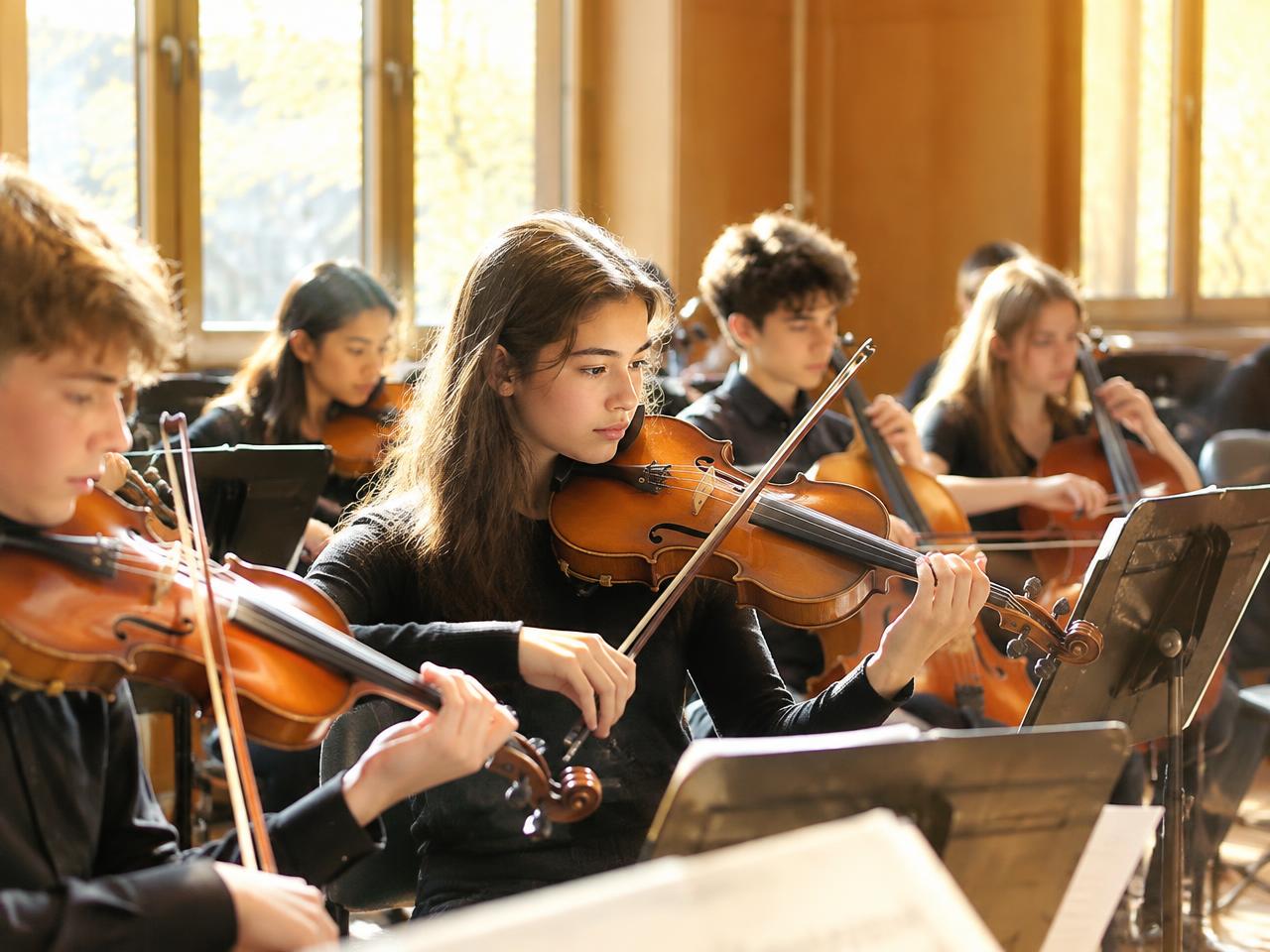
Learn about our Youth Symphony Orchestra

Guthrie Music Rental Library

Guest Artists

Orson van Gay II

Guest Artist

Biography+

STORM AND SEDUCTION: Reformation vs. Carmen, March 22, 2025

Orson Van Gay II has captivated audiences in classical and contemporary opera and concert performances with his charisma and “fine heroic tenor” (San Francisco Classical Voice). Van Gay has garnered acclaim for roles in his home of Southern California and across the United States, with Broadway World declaring, “his sound was fluent and his high notes golden,” and Voix des Arts stating, “The vitality of his work was gratifyingly unflappable.”

He created the role of Raymond Santana in the world première of Anthony Davis’s Central Park Five (Pulitzer Winning Opera 2021) with Long Beach Opera and made his role debut as Rodolfo in La bohème with Pacific Opera Project. He was Nemorino with the Phoenicia Int. Festival of the Voice and sang the romantic lead of the Young Man in Last Romance with Kansas New Theater. Equally at home as a recitalist, Mr. Van Gay has appeared in the Portsmouth Community Concert, Inc. (VA), the Rio Hondo College and at Carnegie Hall in a recital with Wang Wei. This season included working with Maestro Conlon in a supporting role at LA Opera in their production of Il trovatore and with the LA Philharmonic in their preparation of Fidelio. He debuted as Danilo in Pocket Opera’s The Merry Widow, followed by his debut as The Athlete in the West Coast premiere of, I Can’t Breathe with Pacific Opera Project. He was Vitaliano in Long Beach Opera’s Guistino with James Darrah directing; and reprised his role in The Central Park Five with Long Beach Opera in 2022. He reprised the role of Alfredo in La traviata with Piedmont Opera. Mr. Van Gay is the proud recipient of 2022 inaugural Hurst Artist of the year award. In December 2023, he released his debut classical album, Colors of a Lyric – a curation of arias that capture the undyeable warmth and stratosphere of this rising star’s vocal spectrum.

Mr. Van Gay has sung extensively with the Los Angeles Opera in many venues including their “Connects”, “City of Hope” “IAMLA, series. He debuted the role of Bernard Curson in the world première of Figaro 90210 with the company and was Ramerrez in The Prospector in two different seasons. Other operatic roles include Alfredo (La traviata), Ben (The Night of the Living Dead) and the title roles of Candide and Orpheus.

He joined the Cal Philharmonic Orchestra in celebration of Leonard Bernstein’s 100th anniversary and Beethoven’s Symphony No. 9 as tenor soloist at Walt Disney Concert Hall. Reviewed by George van Wagner he stated, “beautifully sung and strongly acted...audience members were visibly moved.” He has sung the haunting role of Orlando in The Industry’s nationally acclaimed production of Hopscotch. In addition to performing in the romantic and Germanic languages of opera, Mr. Van Gay was selected to perform in Mandarin last season making his debut with SINO U.S. Performing Arts Organization as tenor soloist for their concert series with performances in Los Angeles and Phoenix, Arizona.

He premiered Golden; a composition based on the life of Polish composer, Igancy Paderewski by Nathan Wang in Los Angeles and sang the role of Prince in the world première of Ricky Ian Gordon’s Morning Star.

He holds a Bachelor of Science in Vocal Performance from Old Dominion University in Norfolk, Virginia and has been honored by the NATS organization in first place on several occasions.

As a native of southern California, Mr. Van Gay is also an actor in several nationally recognized television series. He has been featured in major television commercials and starred on a variety of shows for Netflix; including foreign film and television. He co-starred on the Disney series Coop & Cami Ask the World.

More on Orson Van Gay ll: http://www.orsonvangay.com

José Luis Maldonado

Guest Artist

Biography+

STORM AND SEDUCTION: Reformation vs. Carmen, March 22, 2025

Hailed by Opera News as a “seemingly unlimited baritone,” international vocalist José Luis Maldonado, from Los Angeles, California attended Cal State Fullerton (BM), and Manhattan School of Music (MM); he is currently attending Michigan State University as a candidate for a doctorate in music, vocal performance under the tutelage of Dr. Mark Rucker.

He is a career grant recipient from the Opera Buffs Inc. and Richard F. Gold Career Grant recipient from the Shoshana Foundation. Maldonado’s roles include Don Alfonso (Così fan tutte), Don Magnfico (La Cenerentola), Escamillo (Carmen) , Don Giovanni (Don Giovanni) and the title role of Falstaff (Falstaff).

He first performed with Maestro Anthony Parnther in his Long Beach Opera debut in Anthony Davis’ Central Park Five. In 2022, he covered Sir Bryn Terfel as Sir John Falstaff in Falstaff at the Aspen Music Festival. He reprised Falstaff in March 2023 at Michigan State, and returned to Aspen to sing Father Arguedas in the opera Bel Canto, by Jimmy López. Maldonado was analist in the inaugural Duncan Williams Competition, a collaborative effort by Manhattan School of Music and New York City Opera, and was a District winner for the Metropolitan Opera Competition, Audience Prize winner in the Opera Ithaca Competition, and finalist in the Tenor Vinas Competition in Spain. Maldonado has toured with Opera Maya in Cancún, Mexico and in Aspen he performed a Zarzuela concert with world-renowned Metropolitan Opera Star Ana Maria Martinez, and took lessons with legendary sopranos, Carol Vaness and Renee Fleming.

Maldonado last season debuted the role of Don Giovanni in Michigan, before returning to Los Angeles and debuting with Lyric Opera of Orange County in Falstaff and the Father in Hansel y Gretel. He then made his Pacific Opera Project (POP) debut as the Hunter in Dvorak's Rusalka. He is currently singing in Opera Grand Rapid's “Hip Opera” tour, blending opera and hip-hop, which ends the season this May. Maldonado also made his Lincoln Center debut as Escamillo in La Carmencita, an Argentinian adaptation in Spanish of Bizet’s Carmen, and return to New York in May to sing in Carnegie Hall’s Nuestros Sonidos celebration. For more information, visit www.BaritoneJoe.com

Pacific Trio

Guest Ensemble

Biography+

"Top string quartets pop up everywhere, but first-rate piano trios are rare. A concert by the Pacific Trio was a special treat, as the trio demonstrated in convincing manner, why it should be considered one of the best."

So began the Los Angeles Times review of Pacific Trio's debut. Each member has enjoyed a celebrated career on the international music scene, rich in recital, ensemble, and concerto performances.

Founded in 1979 in Los Angeles by John Walz and Edith Orloff, this renowned ensemble has played more than 1,000 concerts in the United States, Canada, and Europe. In addition to touring, they serve as trio-in-residence at the Idyllwild Arts Summer Program in southern California.

In 1986, the trio made its New York debut at Lincoln Center, in a concert benefiting the New York chapter of the Alzheimer's Foundation. "Pacific Trio's debut concert at Alice Tully Hall could easily have stood on its own merits, but the players had the generosity to turn the program into a benefit, donating all the proceeds to the Alzheimer's Disease and Related Disorders Association. The members of the trio played with warmth, expertise, and unanimity . . .elegantly tapered, yet directly emotive playing.” (The New York Times).

Pacific Trio began recording in 1989, with a CD of Brahms and Shostakovich, followed by trios of Dvorak and Smetana. Since then, they have completed many extensive European tours and have recorded the Beethoven Triple Concerto with the Czech National Orchestra in Prague. Their latest CD, “American Composers” – featuring music of Gershwin, Bernstein, Copland, and Muczynski - was released in fall of 2009 in conjunction with concerts in Germany, Poland, and France. Reviews in the German press rated their performances as….”chamber music of the highest order.”

The 2011-12 season includes a European trip in addition to concerts in southern and northern California

EDITH ORLOFF, PIANO

A versatile performer, pianist EDITH ORLOFF is acclaimed as recitalist, chamber musician, and concerto soloist whose music-making is praised at home and abroad for interpretive vitality and perceptive musicianship. Her concerts have taken her across the United States as well as to Germany, France, Czech Republic, Poland, Russia, Italy, and Canada. “Her passagework purled, delicacy or crunch emerged to order from her rapid playing, chords had a cushion of authority, articulation illuminated melody.” (Los Angeles Times). In 1998, her German debut was received as “elegant, a pleasure to hear”.

She is a founding member of the Los Angeles-based Pacific Trio, with violinist Roger Wilkie and cellist John Walz, which regularly tours the U.S. and Europe and is featured on numerous international radio broadcasts. In November of 2014, Pacific Trio made its Russian debut in St. Petersburg with a performance at the “Silver Lyre” Festival. The trio is also ensemble-in-residence at Idyllwild Arts summer festival, where Ms. Orloff has taught piano and chamber music since 1976. Pacific Trio’s most recent recordings include a CD of trios by Bloch, Korngold, and Zemlinsky, and the album “American Composers”, featuring works of Bernstein, Copland, Gershwin, and Muczynski.

She has been guest artist with such prestigious groups as the Houston Symphony Chamber Players, Ensemble Con Brio of Bruchsal, Germany, and the Czech String Trio. Promoting new music, she has launched series featuring works of contemporary composers. Ms. Orloff is a regular performer on prominent series in the Los Angeles area, also in duo recital with each trio colleague. She continues a long-standing musical collaboration with her husband, clarinetist David Peck. Their CD of modern works for clarinet and piano was released in 2004. She has also recorded for Yarlung, Marsyas, and Capriccio. Her most recent CD, “Personal Touch”, is an album of varied works for solo piano by old masters and contemporary composers on the Encora label.

Ms. Orloff holds two degrees from CalArts, where she studied piano with Earle Voorhies and chamber music with Cesare Pascarella. Other influential teachers were Reginald Stewart, Jerome Lowenthal, Rosina Lhevinne, Daniel Pollack, Hellmut Hidegheti, and Roberto Eyzaguirre.

In addition to her long-time summer faculty position at Idyllwild Arts, Edith Orloff also teaches privately and in master class. Along with musical activities, she enjoys travel, literature, and study of languages. She is fluent in Bulgarian, German, and French.

JOHN WALZ, CELLO

Hailed as one of the outstanding cellists of his generation, John Walz has excited audiences on four continents. Born in Southern California, John Walz began his studies with Eleonore Schoenfeld. In 1966, he heard the great French cellist, Pierre Fournier, play the Dvorak Concerto with Zubin Mehta and the Los Angeles Philharmonic, an event that he says, “changed my life”. In 1973, he traveled to Switzerland to study with Fournier, becoming one of the French master’s finest pupils.

He has made twenty-five tours of Europe, playing recitals and concertos in such important musical centers as London, Paris, Zurich, Geneva, Lucerne, Rome, Vienna, Hamburg, and Oslo. 1983 took him to Australia, where he played in Sydney Melbourne, and Adelaide. His solo engagements with more that 120 symphony orchestras throughout the world have included performances of 25 different concertos. In 1997, he performed the Dvorak Concerto in Prague at the Rudolfinum, Dvorak’s own hall. This performance was subsequently recorded and released on Carlton Classics, to great acclaim. Most recently he performed and recorded Bloch’s Schelomo and the Shostakovich Concerto #1 with JoAnn Falletta and the Czech National Symphony Orchestra.

Equally at home in chamber music and orchestral playing, he is currently the principal cellist with the Los Angeles Opera, having previously held that position with the Long Beach Symphony for twenty years. As a chamber music artist, he has played with such luminaries as Leonard Pennario, Mona Golabek, Nathan Milstein, Jean-Pierre Rampal and Pierre Fournier.

In 1979, John Walz was a founding member of the Pacific Trio. This renowned ensemble, which consists of violinist Roger Wilkie, and pianist and co-founder Edith Orloff, has played more than 900 concerts throughout North America and Europe. In addition, Mr. Walz is currently on the faculty of the Idyllwild Arts Academy in Idyllwild, CA. Future engagements include a debut with the Phillipine Philharmonic in Manila, and the release of a new cd by the Pacific Trio, featuring Beethoven’s Triple Concerto and “Archduke” Trio.

ROGER WILKIE, VIOLIN

A Southern California native, violinist Roger Wilkie has enjoyed a rich and varied musical life. Born to a musical family, Mr. Wilkie’s professional career began in 1983, with a six-year tenure in the Los Angeles Chamber Orchestra, eventually serving as principal second violinist.

He has since returned to the ensemble appearing as guest concertmaster. This experience led to other opportunities as guest concertmaster with such groups as the Los Angeles Opera, including productions of Strauss operas Die Frau Ohne Schatten and Der Rosenkavalier, the Round Top Festival Orchestra of Texas, the Music Academy of the West in Santa Barbara, and the Real Filharmonia de Galicia, Spain, under music director Helmut Rilling. Presently, Mr. Wilkie’s orchestral life is centered around the Long Beach Symphony, where he has served as concertmaster since 1990.

He has had many opportunities to solo with the orchestra, performing the violin concertos of Brahms, Mendelssohn, Sibelius, Bruch, Prokofiev, and the Brahms Double Concerto with cellist John Walz.

Mr. Wilkie is in great demand as a chamber musician. He was a founding member of the Angeles String Quartet, performing and touring from 1988-1993. He was solo violinist with the Santa Barbara based Camerata Pacifica, on whose series he played hundreds of concerts as recitalist and chamber musician over a ten year period. He has appeared at many chamber music festivals including La Jolla Summerfest, Santa Fe Chamber Music Festival, and Martha’s Vineyard Chamber Music Festival.

Presently, Mr. Wilkie is a member of the Pacific Trio with cellist John Walz and pianist Edith Orloff. This renowned ensemble has concretized in Europe in 2002, and again in 2004. Highlights of theses tours included a performance and recording of Beethoven’s Triple Concerto with the Czech National Symphony Orchestra.

Mr. Wilkie’s career also extends to the Hollywood Studios, where he has participated in the soundtracks for hundreds of films. In 2005, he received the honor of serving as concertmaster for John William’s scores for “Munich”, and “Memoirs of a Geisha”.
Looking for news from earlier seasons?

News & Press gathers the Symphony's announcements from 2023 to 2026.

San Bernardino Symphony

With gratitude to our sponsors & partners

San Manuel Band of Mission IndiansCalifornia Arts CouncilState of CaliforniaCalifornia State University, San BernardinoSan Bernardino Community College DistrictCity of San Bernardino Fine Arts CommissionInland Empire Community FoundationThe Rauch Family FoundationThe Bruce J. Heim FoundationMusic Performance Trust FundArrowhead United WayDignity Health — St. Bernardine Medical CenterWalmartLithia 4 KidsThinkwise Credit Union